A police report may reduce an entire evening to the size of a few pages. A single incident could be enough.
It’s not often that you find an existence that is this clean and tidy.
Perhaps dinner started at seven. A fight broke out at nine. Someone went out at ten, returned later, and a neighbor called the police at around midnight. Maybe the driver went out with friends and then was behind the wheel. He was stopped a couple of miles further. In the morning the incident could was dismissed as a criminal case.
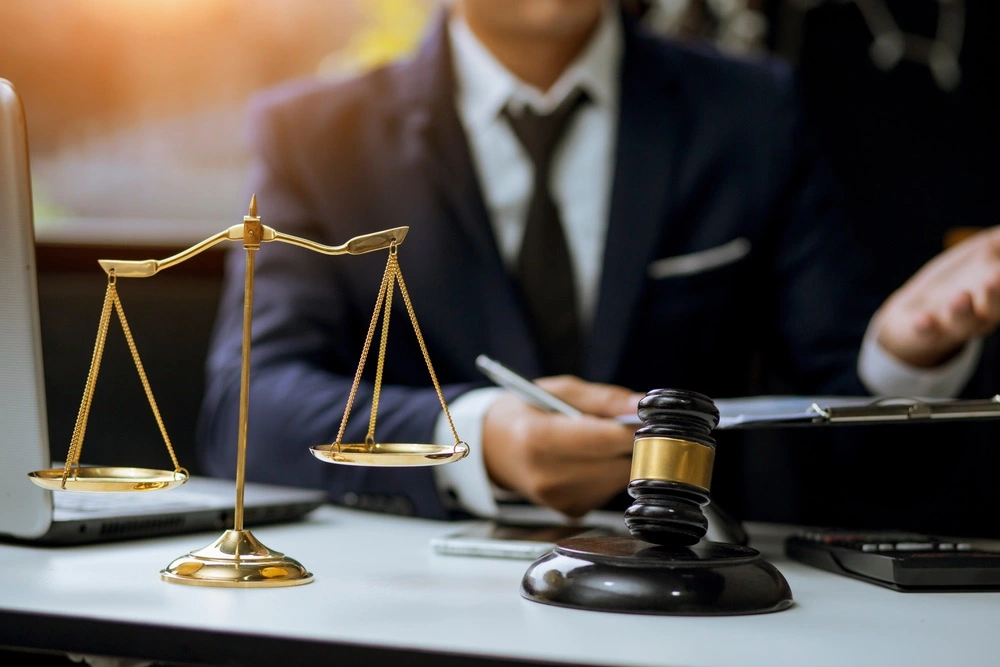
For criminal defense lawyers in Grand Rapids, Michigan, one useful task is putting the sequence back together.
Start Earlier Than the Arrest
Most people will remember the dramatic event flashing lights, police at the door, or handcuffs. But understanding what happened may require going further back.
Michigan law, for instance examines the relationship of the parties in the case of domestic abuse. The information supplied by the firm pinpoints persons such as spouses, former spouses parents of children who share a home, dating partners and people who previously resided together.
The events that led to the police intervention are significant. Did there exist a conflict? Who was in the room? When did the encounter begin? Did anyone leave and return? Was there communication prior to or afterward?
These questions aren’t designed to make up a false narrative. They can help domestic violence defense lawyers who are located in Grand Rapids, Michigan understand the allegation in its actual context rather than viewing the moment when police arrived as the starting point of all.
In addition, the specific charge is vital. Michigan differentiates between different domestic violence crimes, and the firm’s materials state that prior convictions could affect the severity of subsequent charges.
The Stop for OWI is its own Timeline
The sequence of events involved in a drunk-driving investigation can be shorter, but it’s still significant. It is essential to look at the sequence of events which includes the actual driving, the reason the officer was able to stop you, what he observed following the stop along with roadside procedures, statements or tests, as well as the arrest itself. By treating everything as one event can hide the fact that various aspects of the encounter serve different purposes.
Michigan’s MCL 257.625 which is also known as Operating while intoxicated (OWI), defines the offense. In the firm’s information, it is stated that a preliminary breath test (commonly called PBT) is commonly referred to as a PBT) is an instrument for screening and is cannot be used as evidence of intoxication at trial. It could be utilized to establish the probable causes.
This is why it is important the drunk driving attorneys in Grand Rapids Michigan reconstruct the incident, instead of simply focusing on the number the driver remembers from the roadside.
Sometimes, the Timeline is present on a phone.
It is not required for police officers to be witnesses the crime prior to beginning an investigation.
Sexual offenses that are suspected to have could be attributed to things that happened earlier in life like a prior relationship, family interaction or even the work surroundings. According to the description provided by the firm the individual may learn about an investigation prior to being charged.
In this situation the chronology may be spread across several sources. Communication records can reveal when people communicated. Digital records can help to explain an event. The same time period could be described differently by the people who were affected.
However, that doesn’t mean a single text message is a guarantee that can prove or disprove an allegation. This means that criminal sexual misconduct defense attorneys in Grand Rapids, Michigan may require to comprehend how communications as well as statements, credibility issues and other information available are interconnected.
Memory and documentation aren’t the Same.
Following a stressful encounter people tend to remember moments and not timestamps. The expression “It was later that evening” is normal in conversation however it may not be sufficient to answer a significant legal question.
Documents can be helpful in organizing these memories. Call history and messages and receipts, court documents or even receipts, as well as photographs, can help you establish a better chronology. The details of the case will depend entirely on the case.
It is also crucial to preserve records and to not alter them in order to alter the look of the situation. A defense attorney can determine what information is potentially significant and the best way to handle it.
A Case Number Can’t Capture an Entire Evening
Shawn Haff reports more than 16 years practicing criminal defense in Grand Rapids, and the Criminal Defense Law Center of West Michigan has more than 1,500 cases dealt with over a period of 25+ years of combined practice. The experience of the firm includes OWI, domestic abuse, assault, drug charges, sexual assaults, weapons criminal fraud at the point of sale, driver’s licence restoration and expungements.
Past results including dismissals, reductions, acquittals, or favorable pleas cannot guarantee the outcome of a case in the future.
Each new issue comes with its protagonists, sequences, allegations, evidence, etc. This is why it’s important.
An arrest can happen in minutes. The charge label is simply written down in a few sentences. It is important to examine the entire night and also the order in which events occurred.