You can expect burns, sores, and blisters to heal by themselves. With a little bit of cleaning and care your body can recover itself. If the wound doesn’t heal after four to six week, or begins to appear worse with redder skin, inflamed or emitting an unpleasant smell, it’s an indication that something isn’t right. A small sore can turn into a leg or foot wound that won’t heal. If untreated this could result in serious problems and may even lead to an Amputation.
It’s time to get help if you haven’t been able to heal a wound.
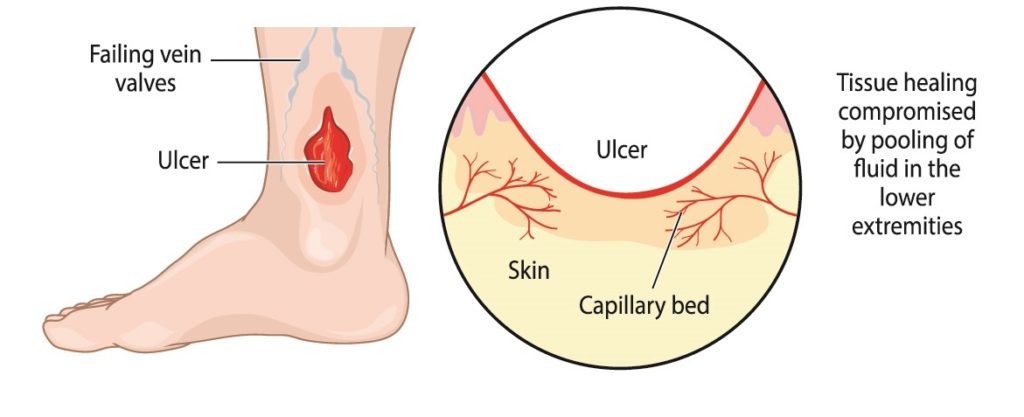
What causes some wounds to not heal
Knowing the reasons why a wound won’t heal can help both you and your doctor decide the best method of treatment.
First, if you’ve got diabetes, you’re at an increased danger of developing foot and leg ulcers that aren’t healing well. A high blood sugar level can cause nerve damage (so it’s not possible to feel injuries in the event of an injury) and restrict the flow of blood, making it difficult for even tiny cuts to get better.
Poor circulation could also be the cause. This is often associated with venous or artery ulcers. If your arteries, veins or vessels don’t function properly, your blood isn’t delivering enough oxygen and nutrients to help heal your skin.
You may also develop bedsores (pressure ulcers) if you have mobility issues. Bedores are a different kind of wounds that are extremely resistant if not treated properly.
Other elements like the aging process, certain medications (like blood thinners) and autoimmune disorders, or even a poor diet can affect healing. Sometimes, it’s the combination of the above factors that can cause an injury to not heal.
How long does healing need to take? And what if it doesn’t?
It is possible to ask what is the “normal” healing time is. The truth is, the length of time it takes to heal varies based on your health and the type cut. A small blister or cut may heal within some weeks. If you’ve got an wound that isn’t healing or a leg injury which isn’t healing, it can last for 12 weeks.
It’s crucial to not delay if there is no improvement in 4 to 6 week. You should consult an expert for wound treatment. The longer the wound is left open, more risk is posed to it.
You’re owed more for finding the Best Help
If your sore won’t heal the same way, it’s not “bad luck” or a problem that you can ignore. the body’s signals are telling you it requires assistance. The good news is? Experts and treatments can make a difference. At our clinic, we specialize in treating non-healing foot ulcers and leg wounds, sore won’t heal working alongside your other healthcare providers to create a personalized plan that gives your body the best chance to heal and helps prevent amputations.
If it’s advanced wound dressings, or restoring blood flow, or specific therapies such as hyperbaric oxygen, there are solutions out there. We’ll assist you throughout the process, as we believe that no one should need to face with a wound that isn’t healing.
Final Thoughts
The effects of a laceration which won’t heal are not just physical. They affect your entire life. There’s hope. Do not be afraid to seek assistance if a leg sore or wound doesn’t heal or if you’re suffering from an injury to your foot that isn’t healing. The sooner you reach out for help, more quickly your stubborn wound will heal and allow you to return to the life that you’re entitled to.