The owner of a restaurant opens the monthly P&L, looks at sales, then jumps to the bottom line and closes the report.
Do these sound like familiar?
If only these two numbers are scrutinized, the report’s true value is lost.
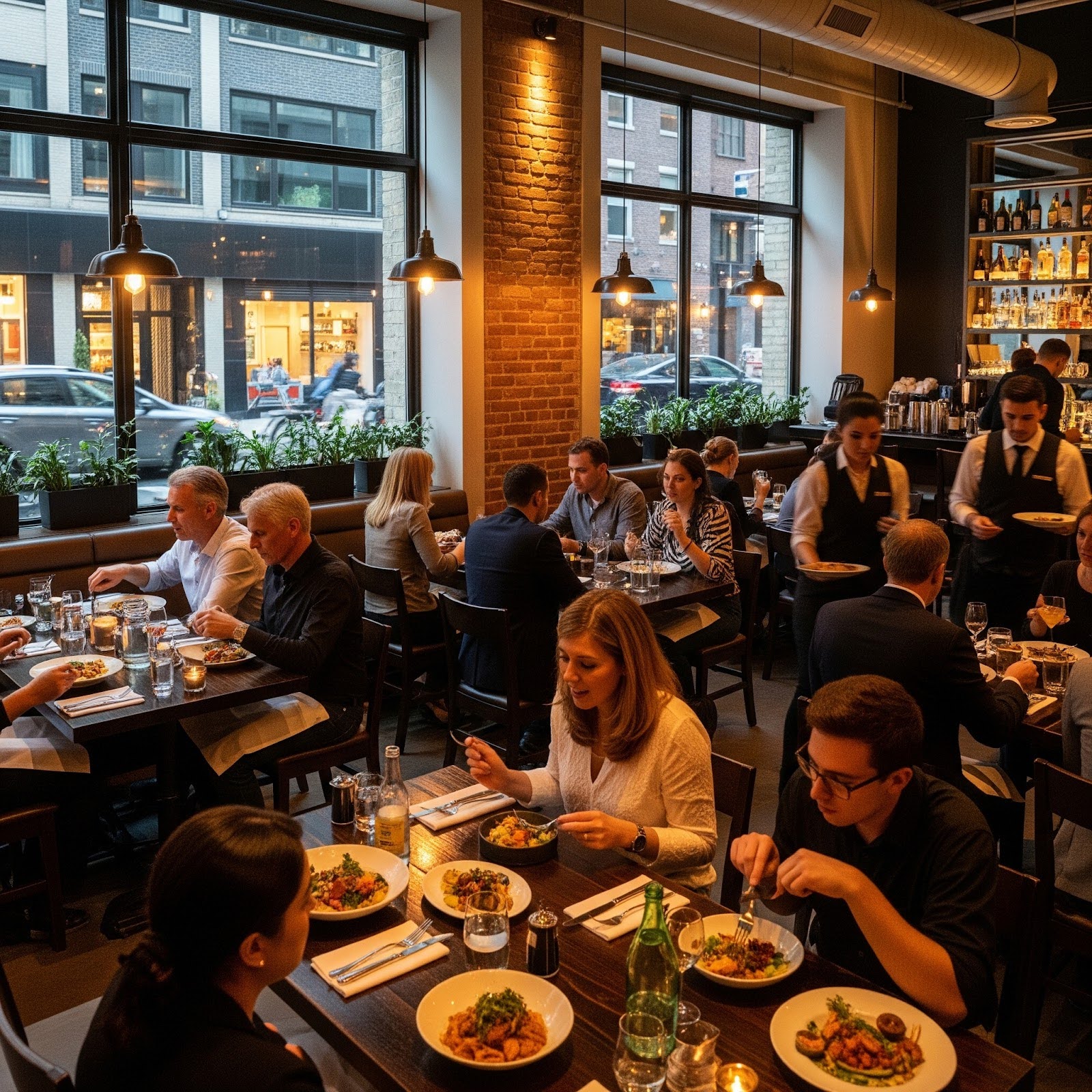
Good restaurant bookkeeping shouldn’t make owners more dependent on an accountant. It should help them become more confident with their own numbers. There is no need to be familiar with every accounting rule and have to spend hours completing invoices. You need to understand how profit has changed and what’s happened to food and labor costs, and what questions should be answered next week.
Bookkeeping Chef’s goal is to automate the bookkeeping process that do not require the attention of restaurant owners, while providing the restaurant owners with better financial data they can utilize.
Don’t stop at Month-End Numbers. Begin by calculating Weekly Numbers
A monthly P&L is important, however restaurants don’t run monthly. This week, managers plan their labor. Chef has ordered food. Vendors change prices now.
This is why Bookkeeping Chef provides weekly prime-cost flash reports along with monthly financial statements.
Prime cost is the sum of two key areas that can be swiftly relocated in a food service establishment: the price of the food that are sold, as well as labor. The data provided by the Bookkeeping Chef reveals that prime costs typically account for 60 percent of sales in restaurants.
Consider a situation where sales are barely changing, but prime costs are growing. This alone won’t be the answer. It gives the owner reason to conduct an investigation.
Was there an increase in hours was worked? Did overtime take place? Changes in food costs? A vendor’s invoice was abnormally high. Has the mix of sales changed?
This is a lot more useful than finding the same problem after a few weeks.
Automate repetitive tasks
DIY bookkeeping doesn’t need to require manual transfer of POS amounts into spreadsheets after the.
Automating the bookkeeping processes of restaurants will eliminate repeated data movement. The service can connect POS systems including QuickBooks, QuickBooks, vendors platforms recipes and inventory management as well as payment instruments and AP.
Automating for the sake of automation is not the objective.
This is to decrease the time spent on manually entering data. Also, it keeps current financial records so that owners can spend time on reading information rather than collecting it.
This is a completely new way of bookkeeping in restaurants. The technology is able to handle more of the mechanics, while the owner remains involved with the financial implications.
P&L Questions: Learn to Ask Better Questions
Stop thinking of your P&L as the accounting test.
Begin by looking at the sales. Start with sales. Compare the performance of drinks and food. Look at labor. Look at labor.
Compare periods.
Something between these two lines has changed, if sales been increasing, but profits have not. If food cost has increased, find out what was happening operationally. Examine the staffing levels and sales activities in case labor percentages changed. Look into any numbers that appear odd, instead of assuming that the restaurant was not doing well during the week.
Bookkeeping Chef provides monthly P&Ls within five working days. This lets the owners look at recent results without having to wait for financial statements which typically arrive months after the close of an operating time.
Understanding is more important than speed for those seeking bookkeeping solutions for restaurants.
You don’t need to be a pro when you make it DIY
You can find a comfortable balance between hiring someone to handle your entire financial functions as well as being your own full-time accountant.
An owner can stay involved without manually performing each accounting job.
The process could be as simple as utilizing automated system connections to ensure that the information is flowing. However, it could be as intricate and complicated studying the monthly P&L or a look at a weekly Prime-cost report.
The services of specialized restaurant bookkeeping can assist in keeping the books in order while helping the proprietor know what the reports mean.
It’s not an owner who is skilled enough to accomplish every bookkeeping job.
A business owner can engage in a dialogue with the P&L regarding the business.
The goal is financial security, not more reports
Restaurants already generate massive quantities of data. A dashboard may not always make sense.
Real value is when an operator can open a P&L report, and see that there was a shift and then examine the prime-cost reports.
Bookkeeping Chef’s method incorporates financial support for restaurants, regular reporting and automated bookkeeping in restaurants to achieve this.
Automate repetitive tasks. Review your prime cost every week. Learn to speak the language of your P&L.
You don’t have to be an accountant professional.
You must become an owner who understands the financials of your own restaurant.